The Black Gold’s Volatility: A Global Interplay
Crude oil, often called “black gold,” is arguably the single most crucial commodity underpinning the entire global economy. Its price is a direct determinant of inflation and global economic growth. Consequently, the market for Crude Oil Futures is perhaps the most volatile and politically sensitive of all global commodity markets.
Oil’s price dynamics are heavily influenced by a potent and often unpredictable mix of supply/demand fundamentals and, most critically, geopolitical events. The delicate balance of oil supply can be instantly disrupted by conflicts, sanctions, or major policy decisions made in distant capitals.
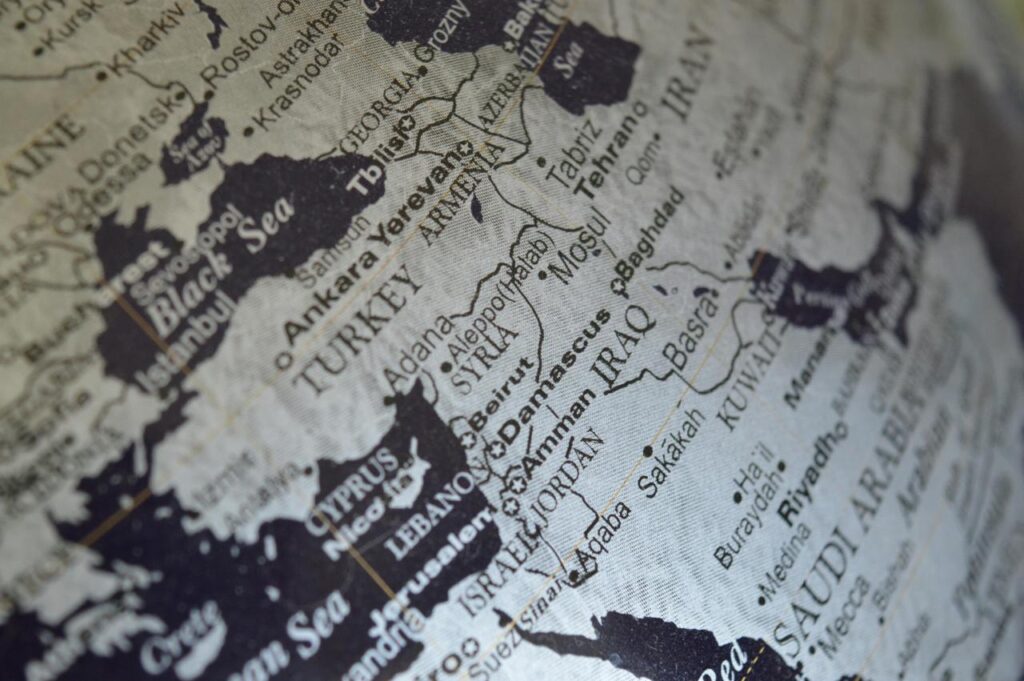
A significant portion of the world’s oil reserves is concentrated in politically volatile regions, particularly the Middle East. Any tension there can trigger immediate and dramatic price swings. For traders, understanding the complex, ever-shifting landscape of global politics is essential.
Mastering this interplay between politics and price is the key to successfully navigating the highly leveraged and fast-moving world of oil futures trading. Traders must anticipate how sovereign decisions or regional conflicts will impact the flow of millions of barrels per day.
Decoding the Crude Oil Futures Market
The trading of crude oil futures contracts is the primary mechanism through which the global market discovers the future price of oil. This market is a massive, highly leveraged financial ecosystem.
A. The Mechanics of a Futures Contract
A futures contract is a legally binding agreement to buy or sell a specific quantity of a commodity. The trade occurs at a predetermined price on a specified date in the future. These contracts are standardized and traded on regulated exchanges.
A. Standardized Contracts: Oil futures contracts are typically standardized for 1,000 barrels of crude oil. They are primarily traded on exchanges like the NYMEX (WTI crude) and ICE (Brent crude).
B. Leverage and Margins: Futures trading utilizes significant leverage. A trader only needs to post a small fraction of the contract’s total value, known as the margin, to control a very large position. This high leverage amplifies both potential profits and significant losses.
C. Hedging vs. Speculation: Large producers and consumers use futures for hedging, locking in future prices to manage operational risk. Individual traders use them for speculation, betting on the direction of future price movements for pure profit.
D. Expiration Dates: Unlike stocks, futures contracts have a finite life and typically expire monthly. As a contract nears its expiration, trading volumes shift to the next month’s contract, a process formally known as rolling.
B. The Two Global Benchmarks
The vast majority of the world’s crude oil is priced and actively traded relative to one of two key global benchmarks. Understanding their differences is absolutely fundamental to navigating the market.
A. West Texas Intermediate (WTI): WTI is the primary North American benchmark, known for its high quality and very low sulfur content (sweet crude). It is traded in Cushing, Oklahoma, and heavily influences U.S. domestic prices and gasoline costs.
B. Brent Crude: Brent is the international benchmark, extracted from the North Sea and dominating European and Asian markets globally. Its price often moves differently from WTI due to regional transportation and specific demand factors.
C. The Price Spread: The price difference between WTI and Brent, known as the spread, is a key and active trading signal. This spread often reflects the current health of regional supply chains and can be a potentially lucrative trading opportunity in itself.
The Power of Geopolitics on Supply
Geopolitical events act as the most powerful and often most sudden catalyst in the entire oil market. They primarily affect the market by instantly reducing or actively threatening to reduce the physical supply of crude oil.
A. The Role of OPEC and OPEC+
The Organization of the Petroleum Exporting Countries (OPEC) and the expanded OPEC+ alliance (which includes Russia) remain the dominant, coordinated force influencing global oil output and policy.
A. Output Quotas: OPEC+ meetings are closely and anxiously watched because the cartel sets collective production quotas for all its member countries. A surprise, unexpected cut in output instantly tightens global supply, causing prices to surge sharply upward.
B. Policy Disagreement: Internal disagreements or policy violations by major members (like Saudi Arabia or the UAE) can seriously threaten the alliance’s stability. Such major instability introduces uncertainty and often leads to heightened price volatility in the market.
C. Spare Capacity: Saudi Arabia is one of the very few producers with substantial spare capacity—the ability to quickly increase output if critically needed. The market constantly assesses this spare capacity as a crucial, flexible buffer against unexpected, large-scale supply disruptions elsewhere.
D. Targeting Price Stability: OPEC+ generally aims to manage the market to ensure a price stability that is high enough for their national budgets but low enough to avoid severely damaging overall global oil demand. Their public policies are inherently political, blending economics with sovereign budgetary needs.
B. Regional Conflicts and Chokepoints
Conflict, instability, or threats to vital shipping routes are the most dramatic and immediate drivers of sharp oil price spikes. This is due to the high geographical concentration of reserves in politically volatile regions worldwide.
A. The Middle East Factor: Because the Middle East holds the largest global reserves, any conflict or major political change in this region creates an immediate, inherent risk premium in the oil price. Traders instantly price in the potential for devastating supply disruptions.
B. The Strait of Hormuz: This narrow, critical maritime passage, connecting the Persian Gulf to the open ocean, is the single most crucial chokepoint for global oil shipping today. Any serious threat to shipping through Hormuz can cause immediate panic buying and a price surge in the futures market.
C. Sanctions and Embargoes: Targeted international sanctions placed on major oil producers (like Iran or Venezuela) instantly and forcibly remove millions of barrels from the legal global market. This deliberate political policy action creates a structural and sustained tightening of global supply.
D. Pipeline Disruptions: Acts of sabotage, severe civil unrest, or catastrophic technical failures along major global pipelines (e.g., in Nigeria, Iraq, or through Russia) can suddenly halt the critical flow of oil. These disruptions often lead to localized price spikes that quickly ripple across the entire global market.
The Demand Side and Global Economics

While supply disruptions grab the biggest headlines, oil prices are equally sensitive to major shifts in global economic demand expectations. Geopolitics can influence demand through its effect on global trade relations and economic policy.
A. Global Economic Indicators
Oil demand is a direct and proportional function of overall global economic activity. Forecasts for global GDP growth are thus tightly linked to projections for future oil consumption.
A. GDP Growth Projections: Strong global economic growth, particularly in major consuming nations like China and India, translates directly into much higher expected oil demand. This market anticipation pushes oil futures prices decisively upward.
B. Recession Fears: Conversely, increasing fears of a global recession or a sharp economic slowdown rapidly and aggressively deflate overall demand expectations. This market fear causes traders to sell futures contracts, leading to significant and sustained price drops.
C. Industrial Output: Key indicators like global manufacturing Purchasing Managers’ Indexes (PMIs) are closely and constantly monitored by traders. Strong PMIs suggest robust industrial activity and higher energy consumption, strongly boosting global oil demand forecasts.
D. Trade Wars and Tariffs: Geopolitical tensions that manifest as trade wars can severely impact fragile global supply chains and overall economic confidence. This situation often leads to a precautionary reduction in business investment and, consequently, lower long-term oil demand forecasts.
B. Strategic Petroleum Reserves (SPR)
The world’s largest consuming nations maintain strategic reserves to deploy during emergencies. The use of the SPR is a non-OPEC geopolitical tool used by governments to manage periods of high prices.
A. Emergency Buffer: Nations like the U.S. and China maintain large Strategic Petroleum Reserves (SPR) to be used only in the event of major, unforeseen supply disruptions. They officially act as an essential insurance policy against catastrophic geopolitical chaos.
B. Political Price Management: A coordinated release from the SPR is considered a powerful policy tool by governments. It is often intentionally used to temporarily counteract high oil prices that may be hurting consumers and significantly contributing to domestic inflation.
C. Refill Strategy: Decisions by governments to stop actively drawing down the SPR and to begin refilling it create a sudden, new source of structural, large-scale demand. The specific timing of this policy decision is a key trading factor for futures participants.
Trading Strategies and Risk Management
Navigating the highly leveraged oil futures market requires sophisticated trading strategies. These must seamlessly integrate both technical analysis and proactive, continuous geopolitical risk assessment.
A. Fundamental Trading Signals
Successful oil futures trading is fundamentally based on interpreting official data releases and accurately anticipating how political events will impact those supply/demand fundamentals.
A. EIA and API Data: Traders closely watch the weekly inventory reports from the U.S. Energy Information Administration (EIA) and the American Petroleum Institute (API). A surprise draw-down in inventory (meaning rapidly falling supply) often causes an immediate, sharp price spike.
B. OPEC+ Commentary: Verbal public interventions or policy statements from key OPEC+ ministers (often referred to as “jawboning”) can significantly influence short-term market sentiment. Traders instantly react to unexpected hawkish (pro-cut) or dovish (pro-increase) comments.
C. Weather Events: Major weather events, like severe hurricanes in the Gulf of Mexico, can shut down offshore production and key refinery capacity simultaneously. Traders immediately price in the temporary loss of both supply and refining capacity, causing a volatile price swing.
D. Commitment of Traders (COT): The weekly COT report officially shows the net positioning of different trader categories (commercial hedgers, non-commercial speculators). A significant, sudden change in the net positioning of speculators often correctly signals an impending shift in the overall market direction.
B. Geopolitical Risk Management
Due to the market’s extreme volatility, disciplined risk management is absolutely paramount in the oil futures market. The high leverage means even small adverse price moves can rapidly lead to massive, account-ending losses.
A. Defined Stop-Losses: Always religiously place and strictly enforce tight stop-loss orders on every single trade. Given the market’s high volatility and potential for geopolitical gap openings, a tight stop-loss is completely non-negotiable for preserving capital.
B. Avoid Oversizing: Never use the full allowable market leverage or aggressively over-size a position based on a single political news event. Position sizing must be conservatively managed to rigorously account for the risk of sudden, unexpected, and violent price reversals.
C. The Risk Premium Calculation: Professional traders constantly and formally assess the geopolitical risk premiumthat is currently embedded in the oil price. Trading decisions often revolve around whether this premium is fundamentally likely to increase (due to escalating conflict) or dissipate (due to de-escalation).
D. Hedging with Options: Futures traders can strategically use options contracts to hedge the risk inherent in their futures positions. Buying a put option provides a predefined level of protection against large, adverse price movements at a fixed, known premium cost.
Conclusion

The crude oil futures market is the world’s most politically sensitive and highly leveraged commodity arena today.
Its intense volatility is a direct function of the tight interplay between physical supply/demand fundamentals and unpredictable global geopolitical events.
Futures contracts enable both large producers to hedge price risk and speculators to bet on future price movements with high leverage.
The production policies of the powerful OPEC+ alliance and the security of critical maritime chokepoints remain the most immediate and significant drivers of sharp supply-side price shocks.
Demand-side expectations, primarily driven by forecasts for global GDP growth, provide the major structural direction for long-term oil prices.
Successful trading in this market demands a unique skill set: the ability to seamlessly integrate rigorous technical analysis with a proactive, continuous assessment of global political and economic risks.
For any participant, disciplined risk management—especially the use of strict stop-loss orders and conservative position sizing—is the absolute, non-negotiable prerequisite for long-term capital preservation in the face of sudden geopolitical turbulence.