
The global financial landscape is currently experiencing a period of profound transformation that is breaking old patterns of synchronized growth. For decades, investors relied on a world where major economies moved in a predictable, unified direction fueled by easy credit and open trade. However, as we navigate through the complexities of late 2025, that era of uniformity has officially come to an end.
We are now witnessing a “Great Market Divergence” where some regions are flourishing under new digital economies while others struggle with aging infrastructure and debt. Geopolitical friction has carved the map into distinct economic islands, each with its own set of rules and growth drivers. This fragmentation is not necessarily a sign of global failure, but rather a shift toward a more multi-polar financial system.
For the savvy investor, this new reality creates a massive opportunity to find value where others see only chaos and confusion. Understanding the specific mechanics behind this divergence is the key to identifying the next decade’s biggest winners in the global market. This article will provide a deep dive into the sectors and regions that are successfully defying the trend of stagnation.
The Breakdown of Synchronized Growth
In the past, when the United States economy performed well, the rest of the world followed suit almost immediately. This was due to the deep integration of global supply chains and the dominance of the US dollar as a global trade tool. Today, that correlation is weakening as regional powers develop their own internal consumption engines and financial systems.
We are seeing a clear split between nations that have successfully pivoted to high-tech manufacturing and those stuck in traditional industries. The performance gap between different stock indices across the globe has never been wider than it is right now. This means that a “buy the index” strategy is no longer enough to guarantee consistent returns for your portfolio.
A. Monetary policies are diverging as central banks prioritize local inflation targets over global financial coordination.
B. Consumer behavior in emerging markets is becoming more localized and less dependent on Western brand influence.
C. Industrial output is shifting toward countries that can provide both cheap energy and high-tech labor forces.
D. Trade agreements are becoming bilateral and regional rather than following universal global standards.
E. Investment capital is fleeing “traditional safe havens” in search of higher yields in overlooked secondary markets.
Digital Sovereignty as a Growth Engine
A major factor driving market divergence is the race for digital sovereignty among the world’s most powerful nations. Countries are no longer willing to rely on foreign software or hardware to run their critical national infrastructure. This has created a massive boom in domestic tech sectors within countries that were previously seen only as consumers.
Governments are pouring billions into local semiconductor production, artificial intelligence research, and cloud computing platforms. This “tech nationalism” is creating high-growth pockets in the market that are insulated from global trade wars. Investors who identify these localized tech leaders can capture growth that is not reflected in broader global tech ETFs.
A. Localized AI models are being trained on regional data to better serve specific cultural and linguistic market needs.
B. Cybersecurity firms are seeing record growth as nations scramble to protect their domestic digital borders.
C. Domestic payment gateways are replacing global credit card networks in many fast-growing Asian and African economies.
D. Software-as-a-Service (SaaS) providers are tailoring their tools to meet the unique regulatory requirements of specific regions.
E. Hardware manufacturing is moving closer to the end consumer to reduce the risk of international supply chain blockades.
The Resilience of Neutral Markets
As the world’s largest economies face off in a series of trade disputes, “neutral” nations are emerging as the new winners. Countries in Southeast Asia and parts of the Middle East are positioning themselves as bridges between the conflicting economic blocs. These regions are seeing a massive influx of Foreign Direct Investment (FDI) from companies looking to diversify their risks.
These neutral markets offer a stable environment where businesses can still trade with both the East and the West. This “connector” role is driving massive infrastructure development and a surge in local stock market valuations. Investing in these regions provides a natural hedge against the volatility found in the primary global powers.
A. Vietnam and Thailand are becoming the new global hubs for electronics and automotive manufacturing.
B. The United Arab Emirates and Saudi Arabia are transforming into global financial centers that attract capital from all corners.
C. Mexico is benefiting from the “near-shoring” trend as North American companies move production closer to home.
D. India is leveraging its massive population and growing middle class to create a self-sustaining internal market.
E. Indonesia is utilizing its vast natural resources to dominate the global supply chain for electric vehicle batteries.
Commodities and the New Energy Map

The transition to green energy is another massive driver of market fragmentation and divergence. The world is moving away from a system dependent on a few oil-producing nations toward a more complex mineral-based economy. Nations that sit on large deposits of lithium, copper, and rare earth elements are seeing their geopolitical and economic power explode.
This shift is creating a “commodity divergence” where traditional energy companies struggle while mining and battery tech firms flourish. The physical location of resources is once again becoming the primary factor in determining national wealth. Investors must now look at the “geology of the market” to understand where the next growth phase will begin.
A. Copper demand is reaching all-time highs as the world electrifies everything from cars to power grids.
B. Lithium-rich nations are forming “resource cartels” to control the price and supply of battery materials.
C. Nuclear energy is seeing a massive revival in Europe and North America as a reliable source of carbon-free power.
D. Natural gas is being utilized as a “bridge fuel” in developing nations that cannot yet afford a full green transition.
E. Rare earth processing is being localized to prevent any single nation from having a monopoly on the supply chain.
The Evolution of Consumer Spending
Consumer markets are also diverging as demographic shifts create very different spending patterns across the globe. In many Western nations, an aging population is shifting spending toward healthcare and luxury services for retirees. Meanwhile, in Africa and parts of Asia, a young and tech-savvy population is driving a boom in e-commerce and digital entertainment.
These “demographic dividends” create unique opportunities for companies that can tailor their products to these specific age groups. A global brand that fails to localize its strategy will likely struggle to maintain its market share. The future of retail is not global; it is hyper-local and deeply integrated with the cultural nuances of the consumer.
A. Silver economy products, focused on the elderly, are becoming the fastest-growing sector in Japan and Western Europe.
B. Mobile-first retail is dominating the market in regions where consumers never owned a traditional desktop computer.
C. Personalized medicine and biotech are seeing massive investment as governments try to manage aging populations.
D. Low-cost smartphone brands are capturing the hearts of millions of new internet users in the global south.
E. Subscription-based services for digital content are reaching a saturation point in the West but are just beginning in emerging markets.
Interest Rates and Monetary Divergence
For the first time in years, the world’s central banks are no longer moving in lockstep with the US Federal Reserve. Some nations are cutting rates to stimulate growth, while others are forced to keep them high to fight localized inflation. This divergence in interest rates is creating massive opportunities in the foreign exchange (Forex) and bond markets.
Investors can now benefit from “carry trades” and interest rate differentials that were non-existent during the era of zero-interest policies. However, this also means that currency volatility is at an all-time high, making international investing much more complex. Understanding the specific mandate of each central bank is now more important than following a single global trend.
A. Emerging market central banks are becoming more independent and sophisticated in their management of local currencies.
B. Inflationary pressures are varying wildly between nations based on their energy security and food production capabilities.
C. Corporate debt markets are becoming fragmented as borrowing costs differ significantly between regions.
D. Digital currencies (CBDCs) are being tested as a way to bypass traditional international banking hurdles.
E. Yield-seeking capital is moving toward countries that offer high real interest rates and stable political environments.
The Impact of Supply Chain 4.0
The old supply chain model was built on the idea of finding the cheapest possible labor anywhere in the world. The new model, which many call “Supply Chain 4.0,” focuses on resilience, automation, and data-driven logistics. This is creating a divergence between companies that have embraced AI-driven logistics and those that are still using manual systems.
Automation is allowing developed nations to bring manufacturing back home without significantly increasing labor costs. This “reshoring” is revitalizing industrial sectors in the US and Europe that were once thought to be dead. The winners in this new market are the companies that can produce goods closest to the final consumer with the least amount of human intervention.
A. Robotics and 3D printing are allowing for on-demand manufacturing that reduces the need for large warehouses.
B. Blockchain technology is being used to track the origin and sustainability of raw materials in real-time.
C. Predictive analytics are helping companies anticipate supply chain disruptions before they actually happen.
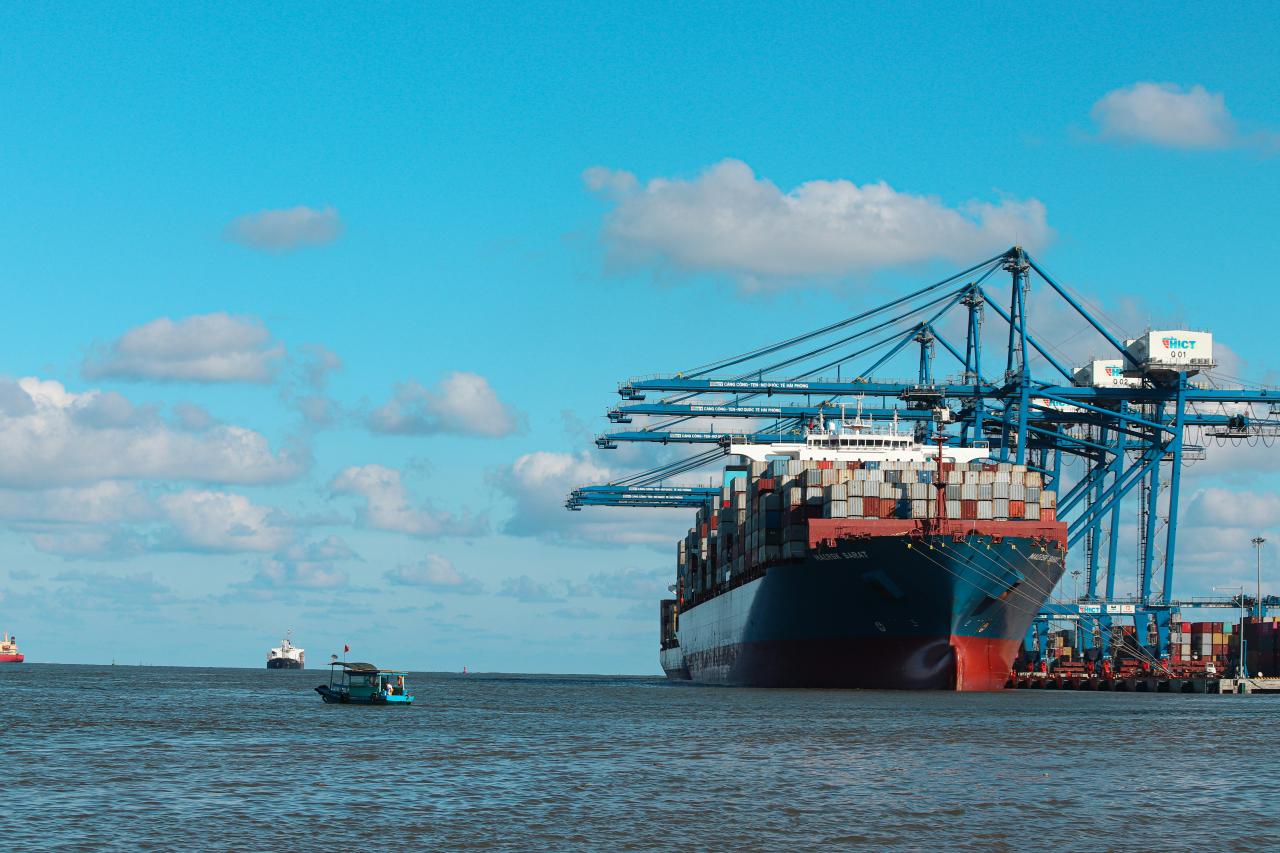
D. Smart ports and automated shipping lanes are reducing the time it takes for goods to move between regional hubs.
E. Circular economy models are being integrated into supply chains to reduce waste and lower the cost of materials.
Identifying Value in Fragmented Equity Markets
In a fragmented economy, equity markets no longer move together as a single “global” asset class. This means that “alpha,” or the ability to beat the market, is found by doing deep fundamental research on specific sectors and regions. Small and mid-cap companies in emerging markets often offer better value than overvalued mega-cap tech stocks in the US.
Investors should look for companies that have a “local moat”—a competitive advantage that is protected by local regulations or cultural barriers. These companies are often overlooked by large global funds but offer incredible growth potential. The era of passive index investing is giving way to a new golden age for active stock pickers.
A. Local banking sectors in emerging markets are benefiting from the rapid financialization of the unbanked population.
B. Specialized healthcare providers in the West are thriving as they cater to the specific needs of an aging wealthy class.
C. Green tech startups in Europe are leading the way in hydrogen and carbon capture technologies.
D. Consumer staple brands in India are seeing consistent growth as millions of people enter the middle class every year.
E. Defense and aerospace companies are seeing a surge in orders as nations prioritize their own national security.
Navigating Geopolitical Risk
Geopolitical risk is no longer a “tail risk” that happens once in a decade; it is a daily reality for the modern investor. The fragmentation of the global economy is driven by political choices just as much as economic ones. This means that an investor must also be a part-time political scientist to understand where the market is going.
Diversification must now be done across political “zones” to ensure that a conflict in one area does not destroy a whole portfolio. Using “political risk insurance” and specialized hedging tools has become a standard practice for professional wealth managers. Those who can accurately price in geopolitical risk will have a significant advantage over those who ignore it.
A. Economic sanctions are being used as a surgical tool to target specific industries and individuals.
B. Sovereign wealth funds are becoming major players in the global market, often driven by political rather than financial goals.
C. International law and trade treaties are being challenged, creating a more “lawless” environment for global business.
D. Dual-citizenship and “golden visas” are being used by the wealthy to protect their assets from local political instability.
E. Cybersecurity insurance is now a requirement for any firm looking to protect its global digital assets.
Conclusion
The world of global finance is moving into a period of deep and lasting divergence.
Investors can no longer rely on a rising tide to lift all boats in their portfolio.
Every region and sector now requires a unique and highly specialized strategy for success.
Fragmentation is creating new walls, but it is also creating new and exciting bridges for growth.
Success in 2026 and beyond will belong to those who can see the value in the gaps.
Risk management is now just as important as the search for high-percentage returns.
The digital and green revolutions are the twin engines driving this great economic split.
Staying informed about local developments is more critical than following global headlines.
Patience and a disciplined approach will be your best tools in this fragmented landscape.
The market is changing, but for the prepared investor, the opportunities have never been better.
Only by embracing this divergence can you truly protect and grow your wealth in the modern world.